
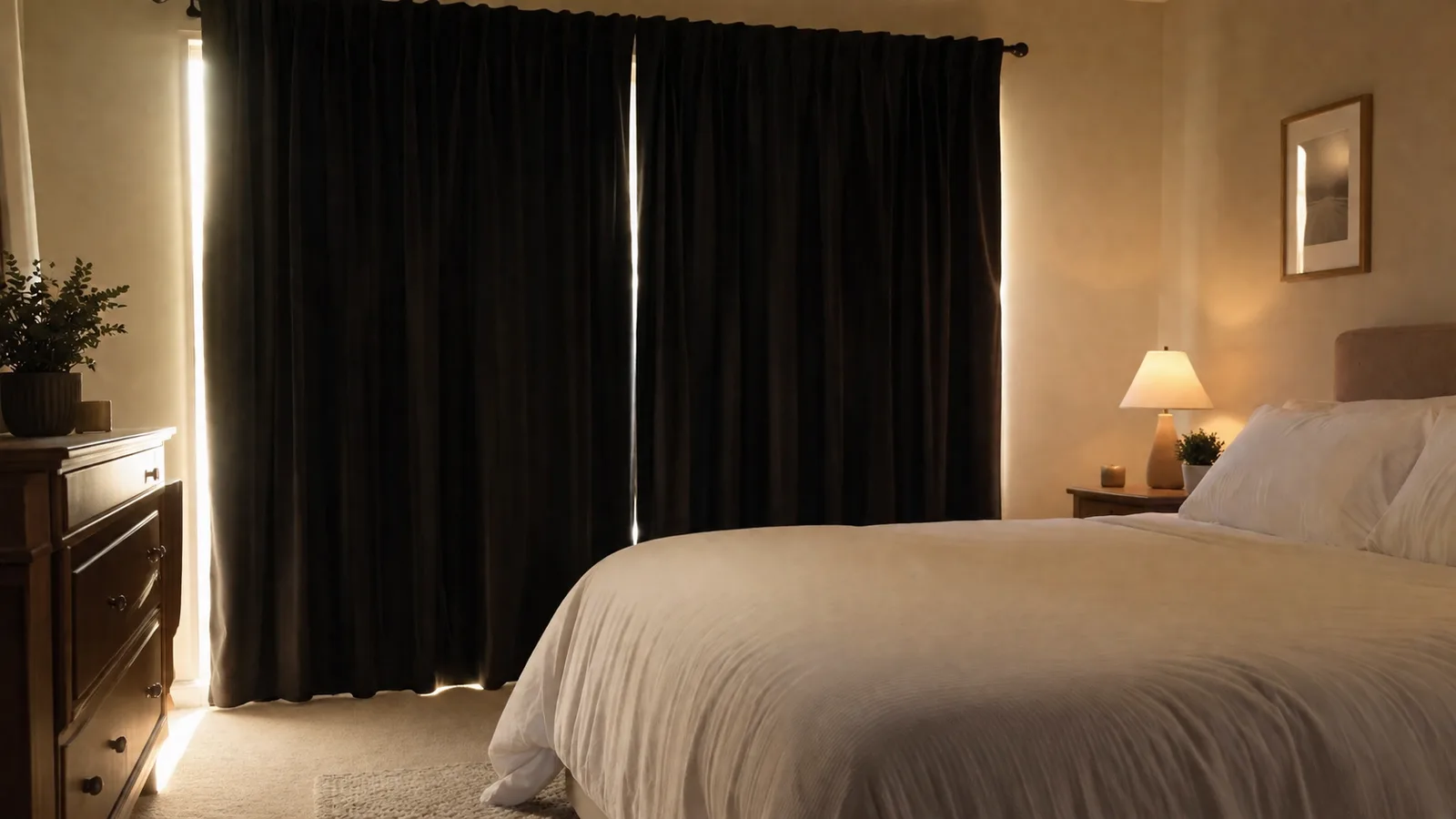
I did twenty-three years of night shifts in a critical care unit before I dropped down to part time, and for at least the first eight of those years I was terrible at day sleep. I'd get home at 7:30 in the morning, pull the shades, and lie there listening to my neighbor's landscaper, my own kids getting ready for school, and a garbage truck that always seemed to hit our block at exactly 9:15. I'd wake up at 1pm feeling like I'd slept in a subway car.
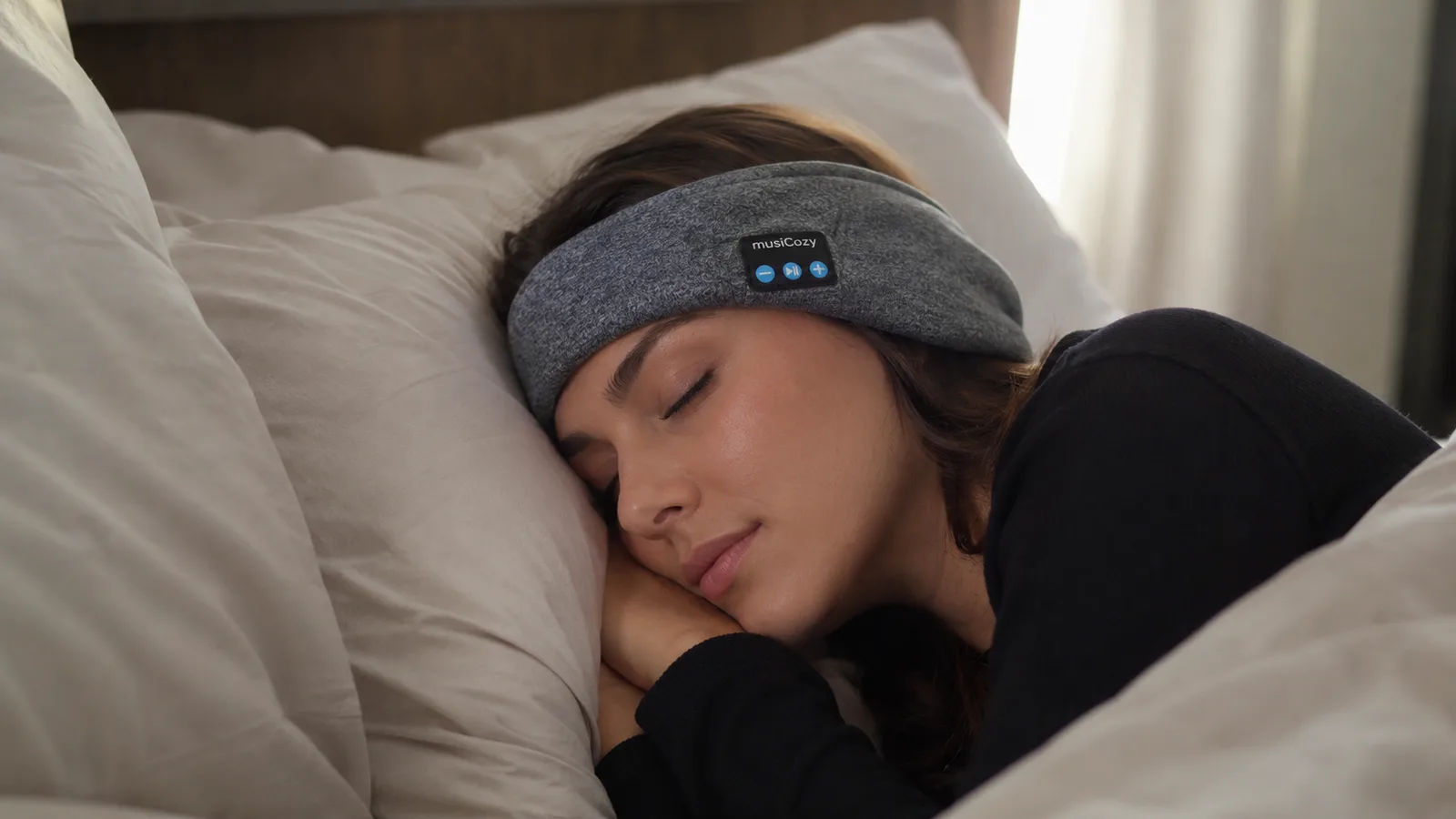
What changed things wasn't one big fix. It was stacking four or five small ones, in a specific order, so each layer caught what the last one missed. The last layer, the one that finally closed the gap, was a pair of MUSICOZY sleep headphones, a soft headband with flat speakers built in that I could actually lie on without stabbing myself in the ear. I still recommend building the whole stack, not just buying the headphones and calling it done, so here's the order I'd do it in if I were starting over.
I want to be upfront about something before we get into the steps. There's no single product that solves day sleep on its own, not even a good one. What actually works is closing off every path a sound has to reach you, one at a time, starting with the biggest gaps and finishing with the sounds that get through no matter what you do to the room. That last category is small, but it's the one that wakes you up angry, and it's worth solving properly instead of just hoping you get lucky.
Start with the layer that does the most work while you sleep
Before you tackle windows and doors, get a pair of headphones built for lying down. This is the one piece of the stack that works even on the days the rest of your plan falls apart.
Amazon Check Today's Price on Amazon →Step 1: Find out what's actually waking you up
Most people skip this and go straight to buying blackout curtains, which helps with light but does nothing for the school bus at 8am. Before you spend a dollar, spend one nap cycle paying attention. Keep a notepad on your nightstand for three days and jot down what wakes you, even if it's just a word. Trash day. Dog next door. Husband's phone alarm. Kids fighting over the bathroom.
In my house it was three things in this order: my own kids in the morning, then the landscaper crew around 10, then a delivery truck that used our driveway to turn around. Once I had it written down, I stopped treating 'noise' as one big fuzzy problem and started treating it as three separate, solvable problems.
This step feels slow but it saves you money. You don't need to seal a whole house against every possible sound. You need to solve the two or three sources that are actually breaking your sleep, and different households have completely different lists.
One more thing worth writing down while you're at it, is roughly when each noise happens relative to when you fall asleep. Something that wakes you in the first thirty minutes, before you're deep in a sleep cycle, is a different problem than something that wakes you two hours in. The early stuff usually needs a structural fix, a door sweep or a thicker curtain. The stuff that gets through hours later, when you're already asleep and it still cuts through, is usually the sharp, close, unpredictable sounds, and that's what a fan or a machine across the room can't touch.
Step 2: Seal the room before you soundproof it
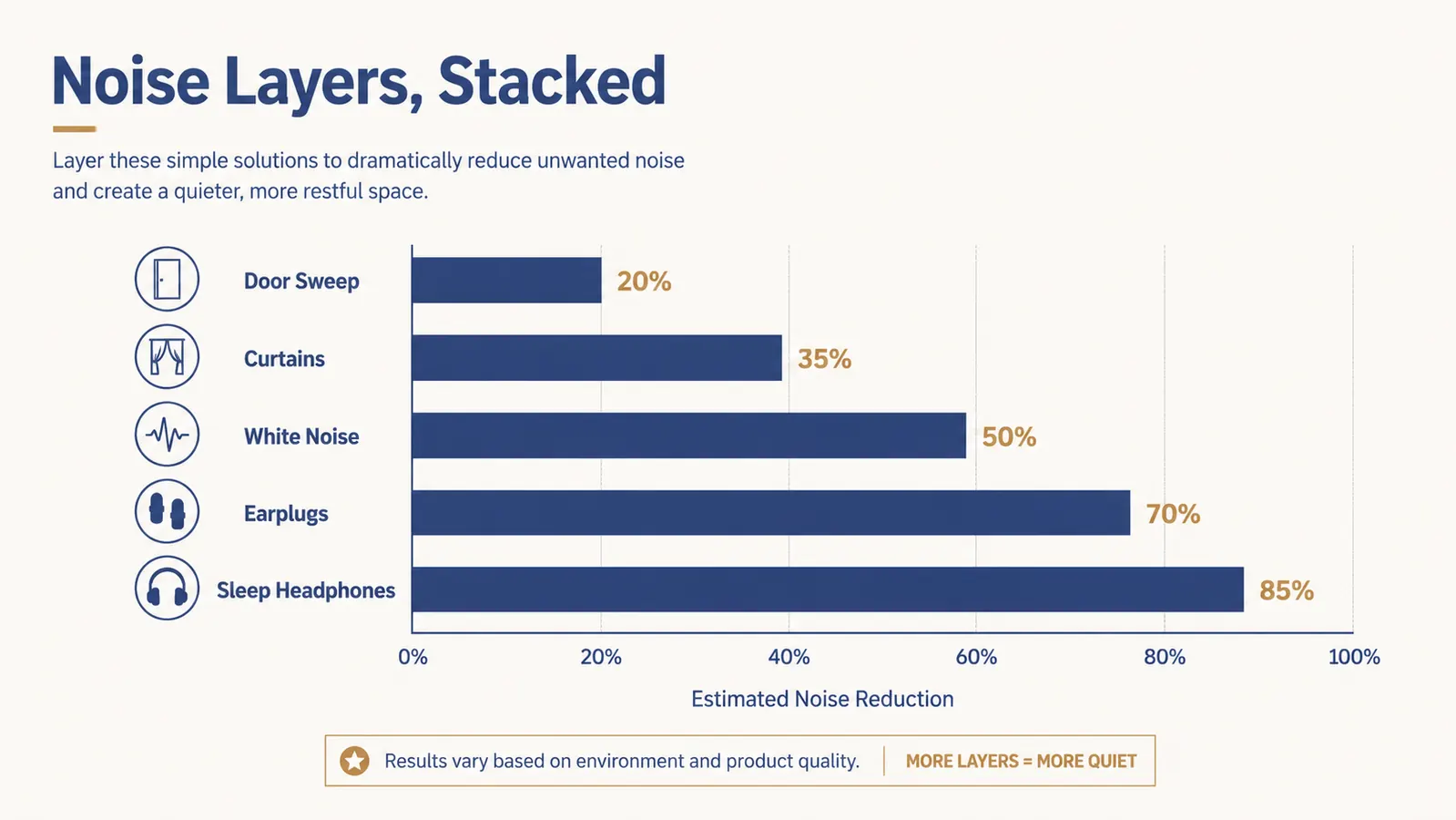
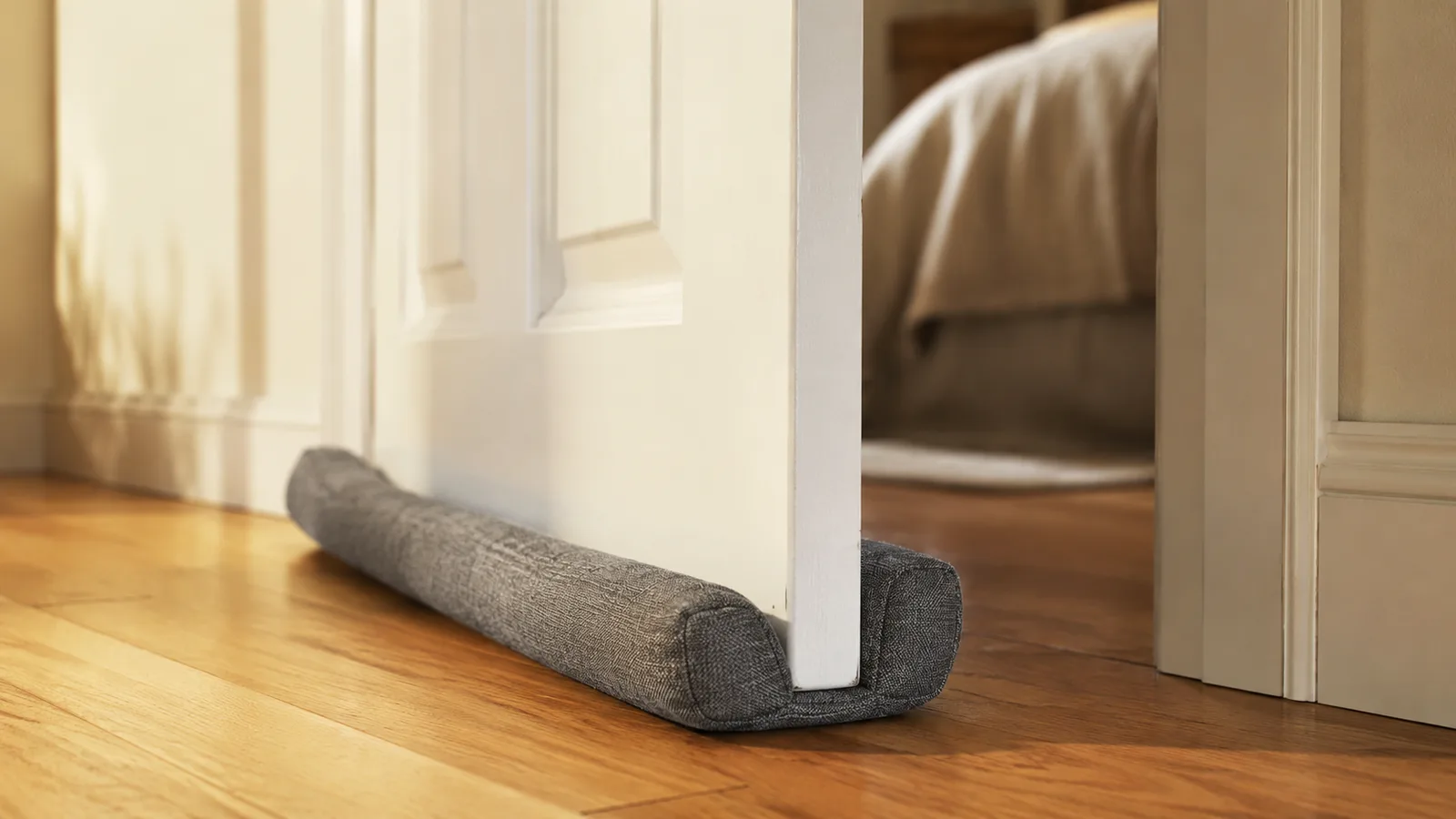
Doors and windows leak more sound than walls do, and most bedroom doors have a half-inch gap under them that lets in every hallway conversation. A door sweep costs under fifteen dollars and takes about ten minutes to install with a screwdriver. I put one on my bedroom door in year two of nights and it made a bigger difference than I expected, mostly because it also blocked light from the hallway.
Windows are next. If you're not ready to invest in real blackout curtains, even a heavy moving blanket clipped over the window during the day cuts a surprising amount of outside noise along with the light. I used binder clips on a tension rod for almost a year before I bought proper blackout panels, and it worked fine in the meantime.
A rug or a runner in front of the door helps too, especially if you're above a room where other people are awake. None of this is glamorous. It's the unsexy fifteen percent that makes everything else you do actually stick.
If you rent and can't do anything permanent, look at removable weatherstripping tape instead of a full sweep kit. It peels off clean when you move out, and it does almost the same job on the sides and top of the door frame where sound sneaks through the gap between the door and the jamb. I recommended this to a coworker who was in an apartment with paper-thin walls, and it was the cheapest fix on this whole list that actually made her say she noticed a difference.
Step 3: Add a steady background sound to hide the sharp ones
This is the step people usually think of first, and it does matter, but it works better once you've already handled the door and window gaps in Step 2. A fan, a white noise machine, or an air purifier running on low all do the same basic job, they give your brain one steady, boring sound to lock onto instead of letting every creak and door slam jolt you awake.
I ran a box fan for years because it was cheap and it was already in the closet. It masked a lot, but it didn't touch anything close to my bed, like a partner shifting or a phone buzzing on the nightstand. That's a different kind of noise, and it needs a different kind of fix, which is where headphones come in.
One thing I learned the slow way, pick one steady sound and stick with it for at least two weeks before switching. Your brain gets used to a specific hum and starts filtering it out automatically, almost like it stops registering as sound at all. If you change the sound every few days, chasing whatever app has the best rain track that week, you never get that automatic filtering effect, and you end up noticing the background noise itself instead of sleeping through it.
Step 4: Put sound directly in your ears for the noise nothing else blocks
A fan across the room can't stop the sound of your kid opening the fridge four feet from your bedroom wall, and it definitely can't stop a phone alarm on the pillow next to you. For that, you need something on your body, and this is where most people bounce off earbuds because lying on a hard silicone tip on your side for six hours is miserable.
MUSICOZY makes their sleep headphones as a soft, stretchy headband with flat speaker discs sewn into the fabric over each ear, so there's nothing hard pressing into your head when you turn on your side. I wear mine most days now, and I fall asleep to a rain sound or a low playlist, then it just fades out because I'm out cold before the sound file loops twice.
The battery runs about eight to ten hours on a charge in my experience, which covers a full sleep cycle with room to spare, and it's Bluetooth so there's no wire to get tangled around your neck when you roll over. It's not noise cancelling in the electronic sense, it's masking, but masking is what actually works for sleep. Noise cancelling headphones are built for flights and offices, not for lying on your ear for six hours.
I side sleep and stomach sleep depending on the night, which is exactly the case where regular headphones fall apart, and it's the reason I stuck with a headband style instead of going back to earbuds. If you're strictly a back sleeper, earbuds might work fine for you, but most people I've talked to who struggle with day sleep are side sleepers, and the headband is built for exactly that position.
Step 5: Give your household a signal, not just a request
The last piece isn't a product, it's a system. Telling your family 'be quiet, I'm sleeping' once doesn't work, because they forget by day three. What worked in my house was a visual signal, a small sign that hangs on the outside doorknob when I'm sleeping, plus one rule everyone agreed to: nobody vacuums or runs the blender between 8am and 2pm on the days my sign is up.
It's a small thing, but it turned my sleep from something I had to defend into something the house just planned around. Your family isn't trying to sabotage your sleep, they usually just don't know your schedule the way you do. Give them an easy way to know.
This step matters more once your headphones and door sweep are already handling most of the noise, because it removes the guilt loop. Before I had a clear signal, I'd hear my kids being normal kids and lie there resenting it, which kept me awake even after the sound itself had faded. Once everyone knew the rules, I stopped bracing for noise, and that alone helped me fall asleep faster.
What Else Helps
A couple of smaller habits stack on top of this. I keep my thermostat a degree or two cooler for day sleep than I would at night, since a warm bedroom in daylight hours makes every sound feel more intrusive. I also stopped checking my phone the second I woke up between sleep cycles, because a bright screen at 11am undoes half of what the blackout curtains were doing.
None of these replace the five steps above, they just make the whole stack hold together better on your rougher days, the ones after a rough night in the unit when I was already running on fumes before I even got in bed. On those days I didn't skip a step, I just leaned on the headphones a little harder and gave myself grace about the rest of it. And on the days I forgot to charge them the night before, I noticed the difference immediately, which told me more about how much they were doing than anything else could have.
You don't need a silent house. You need one loud sound you control to drown out all the ones you don't.
Build the last layer of your day-sleep stack tonight
Handle the door sweep and the curtains this week. Then put on a pair of MUSICOZY sleep headphones for the sounds nothing else in your house can touch.
Amazon Check Today's Price on Amazon →