
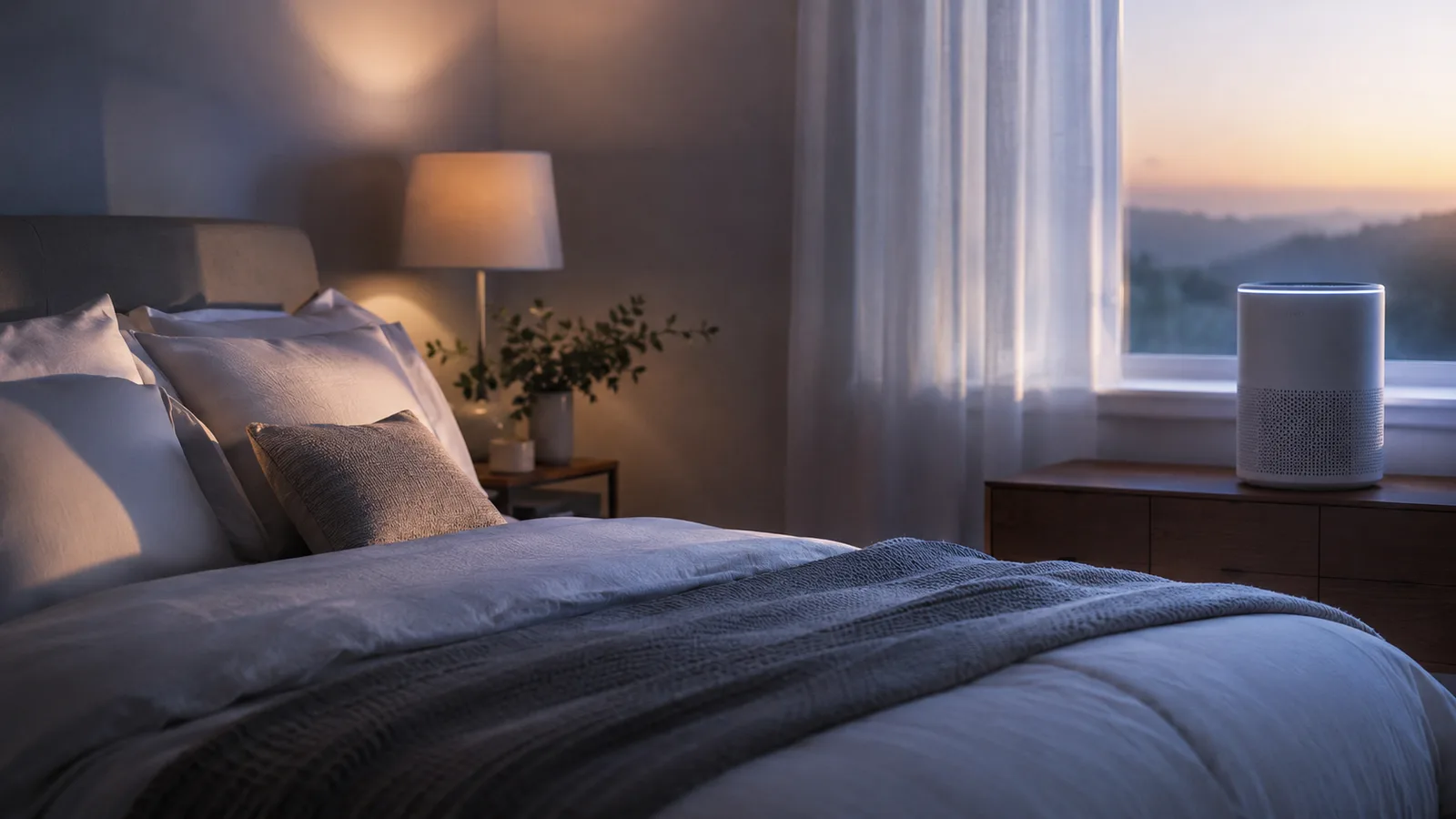
After twenty three years in critical care, most of them on night shifts, I thought I understood every reason a person can't get decent sleep. Pain, noise, a brain that won't quiet down at three in the morning. What took me embarrassingly long to figure out was that the air in my own bedroom was working against me the whole time. I'd get home from a twelve hour shift, shower off the smell of the unit, close the blinds, and still wake up four hours later with a scratchy throat and a dull headache sitting right behind my eyes. For a long stretch I chalked it up to being over fifty and just tired. It wasn't until I actually paid attention, and eventually put a Levoit air purifier in the corner of the bedroom, that I realized the room itself was part of the problem.
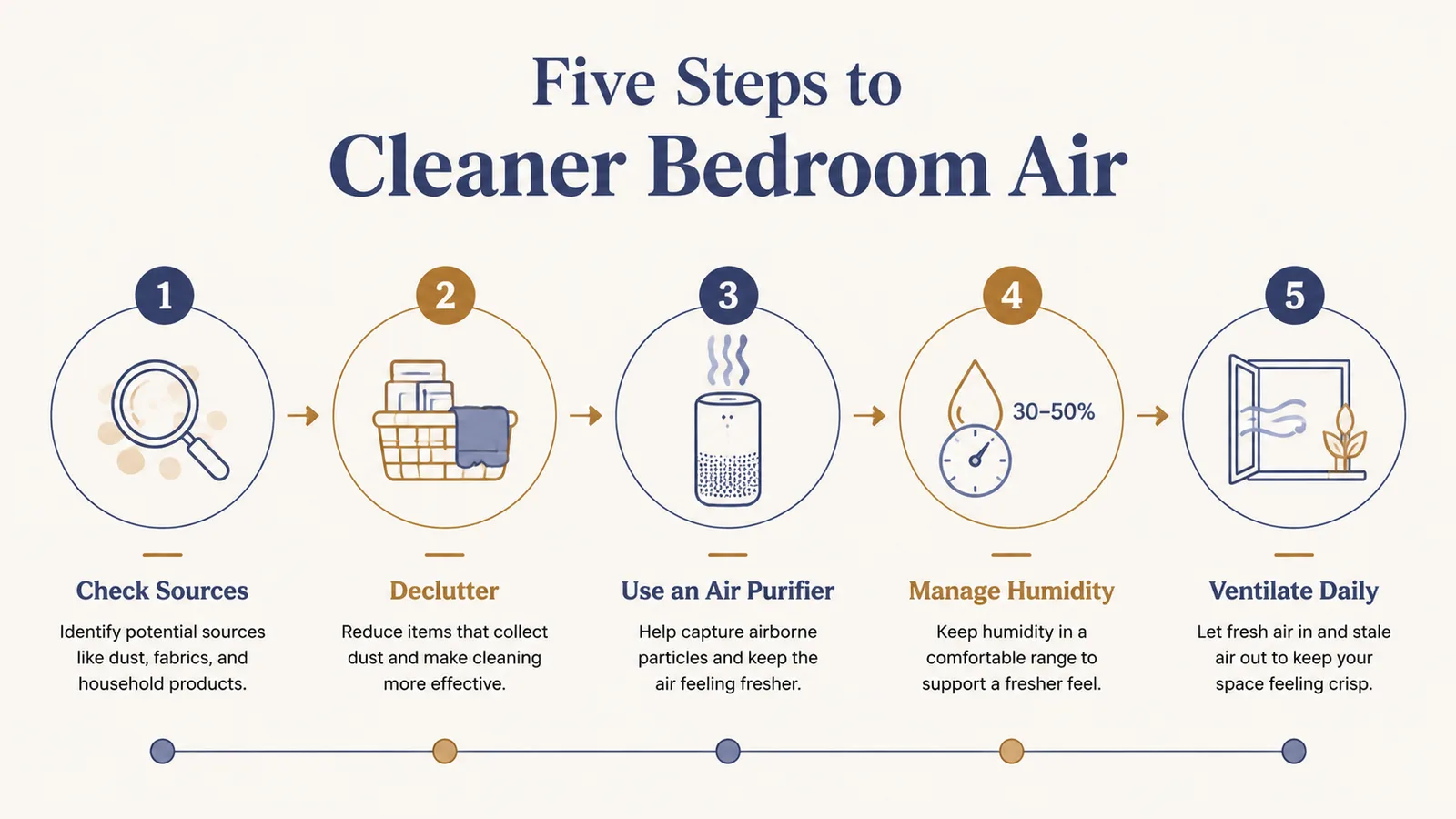
Between two cats, two chihuahuas named Bandit and Luna, and a house that sits close to a road that kicks up dust every time a truck passes, my bedroom air had a lot working against it. I treated the problem the way I'd assess a patient, one variable at a time instead of guessing, and within about six weeks I had a bedroom that actually let me sleep through a full cycle. The single biggest change I made was adding a Levoit Core300-P air purifier to my nightstand and running it every day, not just during allergy season like I used to. Here's the full five-step process I worked through, in the order I actually did it, so you can skip the trial and error I didn't.
The one change that cut my stuffy mornings in half
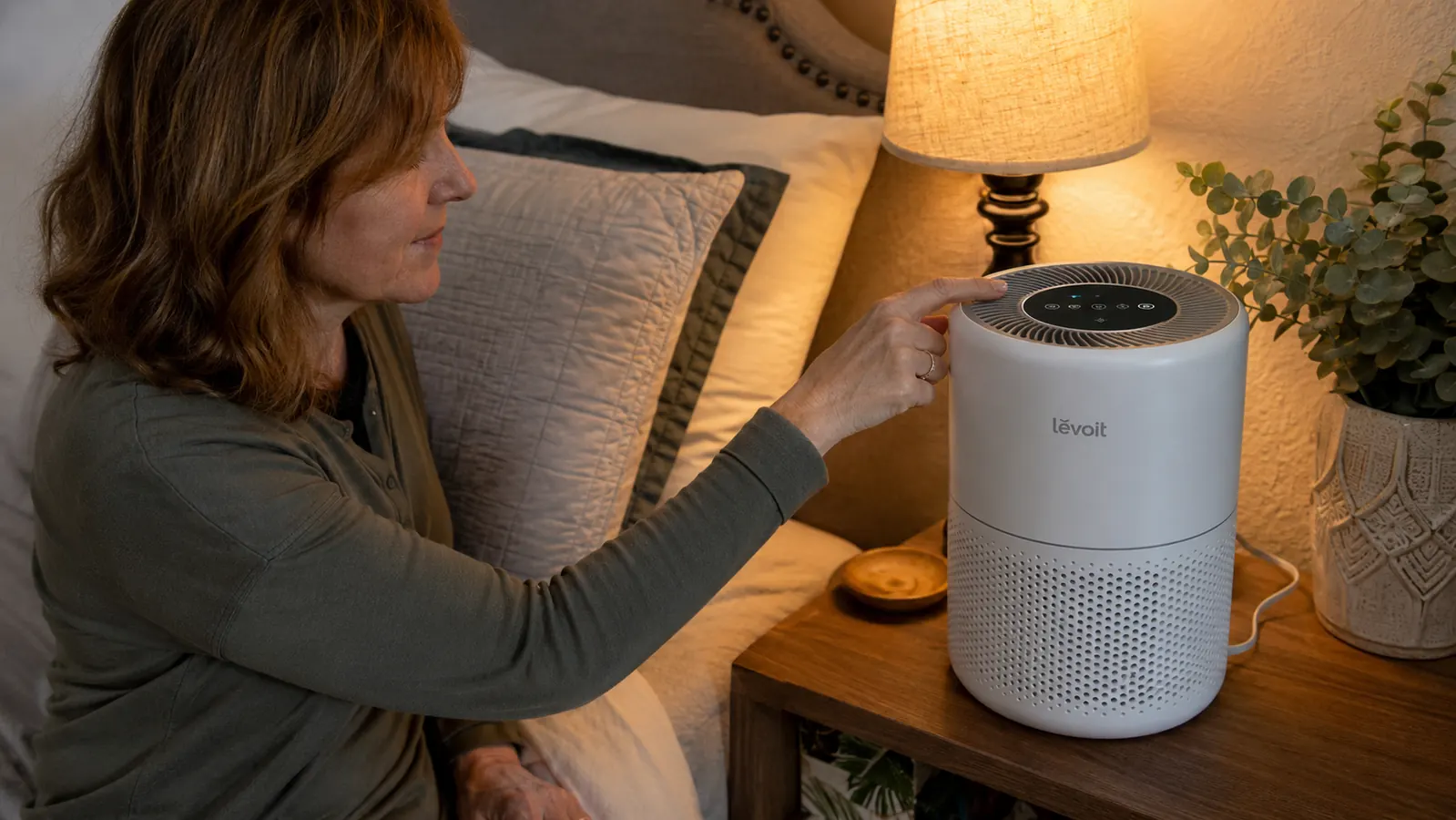
Before you rearrange furniture or start swapping out bedding, the tool that does the most work while you sleep is a real air purifier running every single day, not just when pollen counts spike. This is the Levoit Core300-P I've kept on my nightstand for six months straight.
Amazon Check Today's Price on Amazon →Step 1: Figure out what's actually in your air
Before you buy anything or change a single habit, spend a few days actually noticing what's going on in your bedroom. I did a slow walkthrough one Saturday morning, the way I'd assess a room before touching a patient chart. I ran a finger along the top of the headboard and the blinds, checked the return vent for dust buildup, and looked at the date sticker on our HVAC filter, which turned out to be almost five months overdue for a change.
The sources in most bedrooms are pretty predictable once you go looking. Pet dander from Bandit and Luna and our two cats, Pepper and Olive, dust that settles from bedding and carpet fibers, pollen that rides in on an open window or on clothes after being outside, and for me specifically, whatever clings to scrubs after a shift in a building full of other people's illnesses. None of that means your bedroom is unusually dirty. It just means air quality is quietly working against sleep in almost every home, and most of us never stop to check.
Write down what you notice. A visible layer of dust on the nightstand within two or three days of wiping it down. Waking up congested more mornings than not. A musty smell near a window after it rains. These small observations tell you where to focus first, and they give you something concrete to compare against once you've made changes, instead of relying on a vague feeling that things are better.
Step 2: Clear the dust and pet hair off surfaces first
An air purifier can only manage what's already airborne. If your surfaces are covered in dust and pet hair, every time you sit on the bed or open a drawer, you're kicking more of it back into the air for the purifier to catch up on. So before I plugged anything in, I spent one weekend doing a proper deep clean, not the quick surface wipe I usually did between shifts.
I washed all the bedding in hot water, including the mattress protector, which I'd honestly forgotten needed washing at all. I vacuumed the carpet slowly with a machine that has a real HEPA filter in it, going over the same section two or three times instead of one quick pass. Blinds got wiped down with a damp microfiber cloth, and I finally washed the curtains, which had been quietly collecting dust and pet hair for longer than I want to admit.
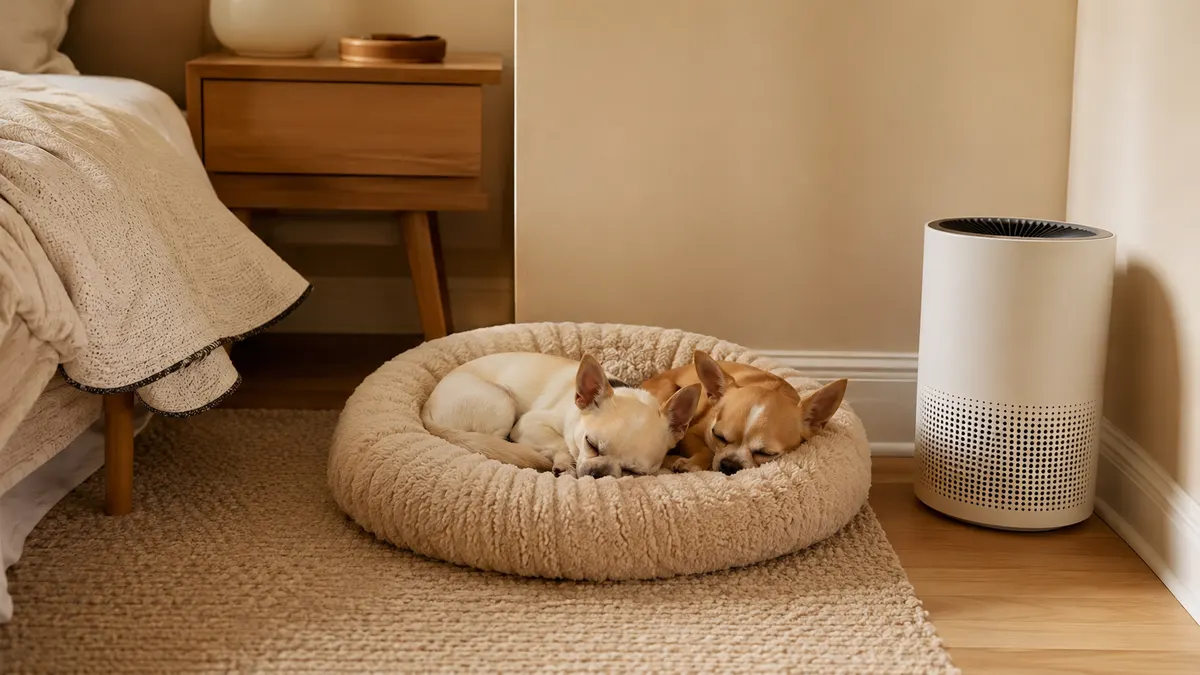
With two chihuahuas who love the bed and two cats who love everywhere, pet hair was the biggest recurring issue. I didn't ban the animals from the bedroom, that was never realistic in our house, but I did start keeping a washable throw over the comforter that catches most of the hair and goes in the wash weekly instead of the whole bedspread. Small change, noticeably less hair migrating onto pillows by the end of the week.
Step 3: Run an air purifier every day, not just during allergy season
This was the step that made the biggest difference for me, and it's the one I'd been doing wrong for years. I used to pull out a small purifier only when pollen season hit, run it for a couple of weeks, then unplug it and forget about it until the next spring. Dust, pet dander, and cooking smells don't take a season off, and I finally understood that once I started running the Levoit Core300-P continuously instead of on and off.
The Core300-P uses a 3-in-1 filter, a pre-filter for the big stuff like pet hair and dust, a true HEPA layer underneath for the finer particles, and a layer of activated carbon for odor. It's rated to cover a room well beyond the size of my actual bedroom, which means it's cycling the air in my room several times an hour rather than barely keeping up with it. That headroom matters more than people expect when you've got two cats and two dogs stirring dust up constantly.
I keep the Levoit about three feet from the head of the bed, on a low dresser where nothing blocks the intake or the airflow. During the day I run it on medium while Bandit and Luna are chasing each other across the floor, and I switch it to sleep mode before bed, which dims the display and drops the fan to a level quiet enough that I've slept through entire daytime stretches with it running two feet from my head. I'm not making any medical claims about what it does for anyone's health specifically, but the visible dust I used to see on my nightstand within days of dusting has genuinely thinned out since it's been running every day instead of a few weeks a year.
Step 4: Manage humidity so mold and dust mites don't get a foothold
Air quality isn't only about particles floating around, it's also about moisture. Too much humidity and you're setting up conditions for mold and dust mites, which thrive above about fifty percent relative humidity. Too little and your throat and sinuses dry out overnight, which is its own separate problem I've written about elsewhere. I picked up a ten dollar digital hygrometer and started checking it a few times a week, the same habit I keep with the thermostat.
In our house, humidity swings depending on the season. Summers here run humid enough that I run the bathroom exhaust fan longer after every shower and keep a small dehumidifier going in the closet, since a closet with damp air sitting still is exactly the kind of spot mold likes best. Winters go the other direction entirely, dry enough that I run a separate humidifier some nights to stay in a comfortable range, but that's a step I keep deliberately apart from the air purifier so I'm not chasing two different problems with one machine.
The habit that actually stuck was checking the number instead of guessing by feel. A reading sitting comfortably between thirty and fifty percent most nights told me I was in a reasonable range, and any time it crept above fifty for more than a day or two, usually after a stretch of rain, I knew to run the exhaust fan more or crack a window for a bit rather than let it sit.
Step 5: Keep the air moving and the room sealed at the right times
The last piece is timing, knowing when to let outside air in and when to seal the room up and let the purifier do the work. On calm mornings with a low pollen count, I crack the window for fifteen or twenty minutes to flush out stale air, usually right after I've made the bed and before the day heats up. It's a small habit, but a bedroom that never gets any fresh air exchange tends to hold onto odors and stale humidity longer than one that does.
During high pollen days, wildfire smoke advisories, or when the field behind our house gets mowed, the window stays closed and the Levoit runs on medium or high instead. I check a local air quality index on my phone the same way I'd check the weather, and it takes about ten seconds to decide whether today is an open-window day or a keep-it-sealed day. That single habit has done more for how my bedroom air actually feels than almost anything else on this list.
A door draft stopper at the base of the bedroom door helps too, keeping hallway dust and kitchen smells from drifting in constantly, especially on nights when Danny is cooking something heavy on garlic. It's a small five dollar fix that made a bigger difference than I expected, mostly because it means the air purifier isn't working against a steady stream of new dust and odor sneaking in under the door all night.
What Else Helps
A few smaller habits round out the bigger five steps above. I swapped the HVAC filter to a higher rated one and set a recurring phone reminder to change it every three months instead of letting it go until it's visibly gray. I wash pillowcases twice a week instead of once, since they sit directly against skin and hair for eight hours at a stretch. And I stopped wearing shoes past the front door, which sounds unrelated to air quality until you realize how much outdoor debris gets tracked in and eventually kicked up into the air by two very energetic chihuahuas running through the house.
None of these replace running the Levoit daily, they just stack on top of it. On the roughest weeks, coming off back to back overnight shifts, I lean hardest on the purifier and give myself grace about the rest of the checklist. It's the one piece of the routine that keeps working even on the days I don't have the energy for anything else.
The air in my bedroom isn't something I think about anymore. It's just clean, and clean air turned out to be quieter than any noise machine I ever tried.
Twenty three years of night shifts taught me to stop guessing about the air I sleep in
Start with the piece that runs every day whether you remember to think about it or not. Check today's price on the Levoit Core300-P before your next allergy season sneaks up on you.
Amazon Check Today's Price on Amazon →