
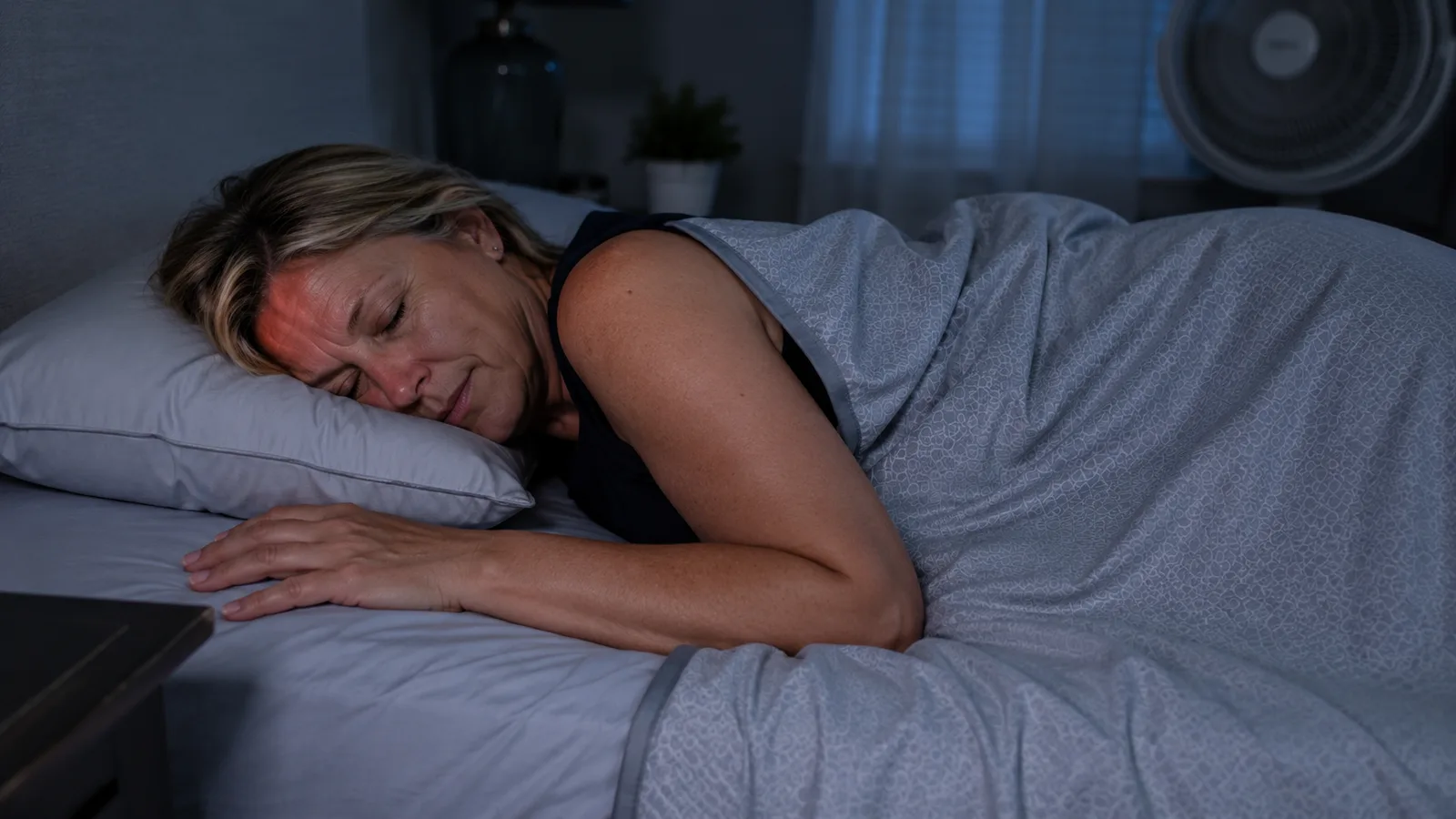
I spent twenty-three years working night shifts as a critical care nurse, which means I spent twenty-three years trying to sleep during the day in a house that never quite cooled down the way I needed it to. Danny used to joke that our bedroom in July felt like a supply closet with the door closed, and he wasn't entirely wrong. Night sweats have been part of my life for a long time now, first from the erratic sleep schedule, later from perimenopause, and honestly these days just from being a warm sleeper married to another warm sleeper. I tried the frozen washcloth on the back of the neck trick. I tried a box fan aimed directly at my face all night. None of it actually solved the problem until I swapped my usual throw for an Elegear cooling blanket and rebuilt a few habits around it.
This is the exact routine I use, laid out step by step, so you can build it too instead of guessing your way through another sweaty night. It isn't a miracle fix and I'm not going to pretend a blanket alone rewires your body's thermostat, but it changed how often I wake up soaked, and that's a real, livable difference.
Stop fighting your blanket every night and start working with it
The Elegear cooling blanket uses an Arc-Chill fiber weave rated Q-Max above 0.5, which means it actually pulls heat away from your skin on contact instead of trapping it the way a regular throw does. Check today's price and see if it's in stock.
Amazon Check Today's Price on Amazon →Step 1: Figure Out Where the Heat Is Actually Coming From
Before you change anything, spend three or four nights just paying attention. Are you waking up drenched in the first two hours of sleep, or closer to 3 or 4 a.m.? Is it your back that's soaked, or your chest and neck? I used to assume my night sweats were purely hormonal, and for a stretch they probably were, but when I actually tracked it, I noticed I was hottest in the first ninety minutes after falling asleep, which is the window when your body's core temperature naturally drops to initiate deep sleep. If your bedding is holding heat in during that window, you're fighting your own biology twice over.
This matters because it tells you whether the fix is mostly about airflow, mostly about what's touching your skin, or both. In my case it was almost entirely about what was on top of me. Danny runs cold, so we kept a heavier shared blanket for years because it was the compromise, and I was the one paying for it every night.
While you're tracking, jot down what you ate or drank that evening too. Alcohol, spicy food, and a late heavy dinner all raise your core temperature or make your body work harder to digest right when it should be cooling down for sleep. I'm not telling you to give any of that up. I'm telling you that a night with wine and Thai food is not a fair test of whether a new blanket is working, so keep those variables in mind before you decide anything helped or didn't.
Step 2: Swap Your Top Layer Before You Change Anything Else
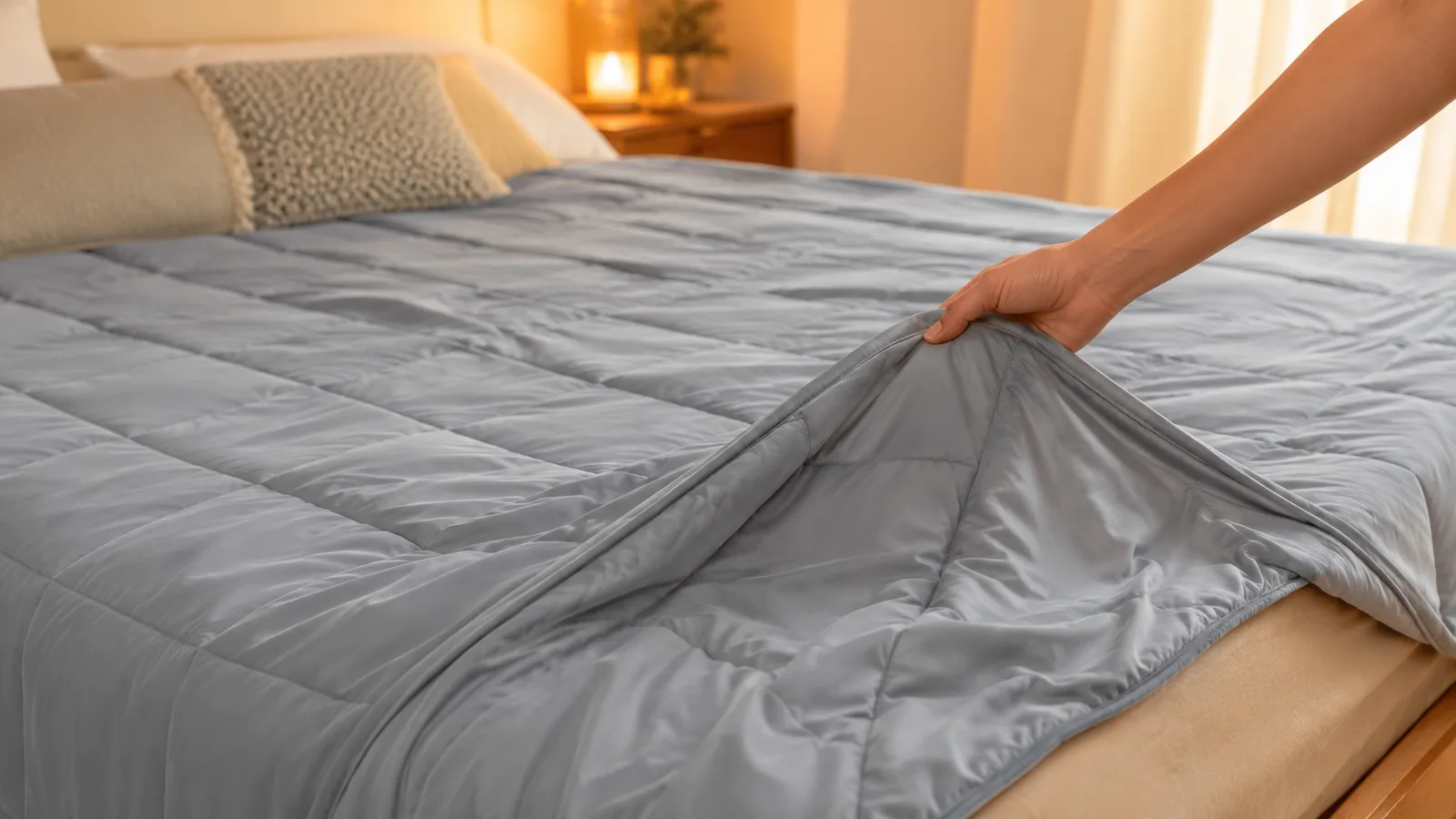
This is the single change that made the biggest difference for me, so I put it first. Instead of buying a new mattress or overhauling the whole bedroom, I replaced my top blanket with an Elegear cooling blanket, which is a lightweight throw built with an Arc-Chill 3.0 cool fiber that's designed to draw heat away from the body rather than insulate against it. It's rated Q-Max above 0.5, which is the industry measure for how quickly a fabric feels cool to the touch when your skin first meets it.
What I noticed in practice, not on a lab sheet, is that I stopped kicking the covers off every night around 1 a.m. That was a habit I'd had for years, half asleep, shoving the blanket to the floor because I couldn't stand the heat building up underneath it. With the Elegear blanket, I stay covered, which actually matters, because getting up to grab a blanket back off the floor at 2 a.m. was its own sleep disruptor I hadn't fully accounted for.
One thing I'll say plainly: this is a lightweight throw, not a weighted blanket, and that distinction matters if you run hot. Weight traps heat against the body regardless of the fabric, so if night sweats are your main issue, a lighter, moisture-wicking layer like this one is a better starting point than anything heavier. I also wash mine on a cool, gentle cycle and skip the dryer sheet, since fabric softener coats the fibers and dulls the cooling effect over time.
It comes in a throw size that's generous enough to actually cover both shoulders when you're on your side, which matters more than it sounds like it would. A cooling blanket that's too narrow leaves your shoulders exposed to the room air while your torso overheats underneath, and you end up half solving the problem instead of fully solving it. I keep a second one folded at the foot of the bed for Danny's side on the nights he decides he wants it too.
Step 3: Set the Room Temperature and Airflow to Work With the Blanket, Not Against It
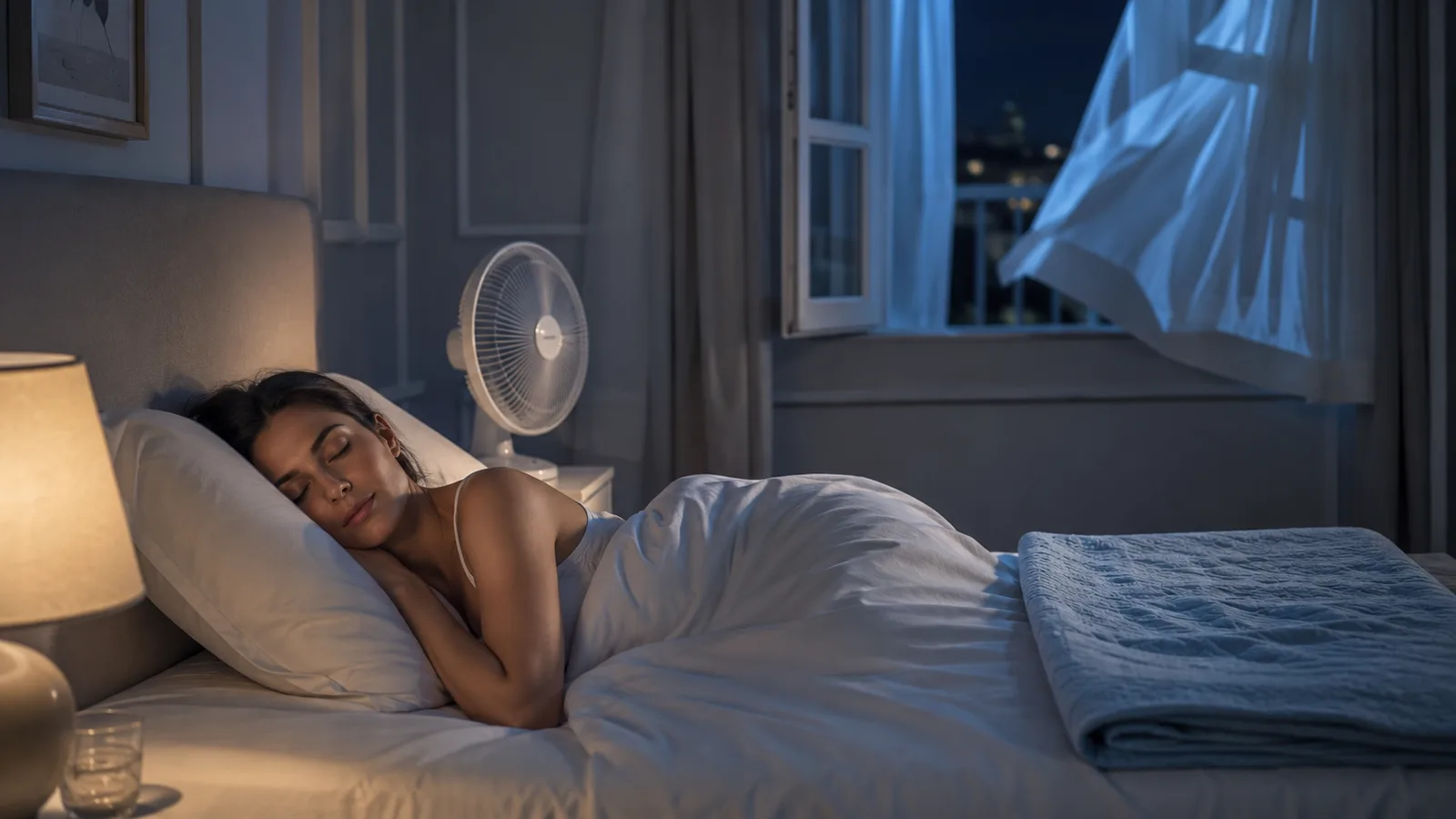
A cooling blanket helps most when the room around it isn't working against you. I keep our bedroom between 65 and 68 degrees overnight, which is on the cooler end of what most sleep specialists recommend, and I run a small fan on low, angled at the wall rather than straight at my face, just to keep air moving across the room. Stagnant air holds humidity close to your skin, and humidity is a big part of why night sweats feel so miserable, it's not just heat, it's heat with nowhere to evaporate to.
If you share a bed with someone who runs cold, like I do, this is usually the part where couples get stuck negotiating the thermostat. What worked for us was separating the problem: Danny keeps his own heavier blanket on his side, I use the Elegear blanket on mine, and we compromise on room temperature somewhere in the middle instead of one of us silently suffering all night.
If your bedroom tends to run humid, a small dehumidifier or even a cracked window on mild nights makes a noticeable difference on top of the fan. I learned this the hard way in a rental apartment years ago where the AC cooled the air but never pulled the moisture out, and I woke up just as damp as before, only colder.
Step 4: Rebuild the Rest of Your Sleep Layers Around Breathability
Once the top layer is handled, look at everything underneath it. Flannel sheets, thick mattress pads, and synthetic pajamas all trap heat close to the body, and a cooling blanket can only do so much if it's fighting three other layers of insulation. I switched to a plain cotton percale sheet set a while back, nothing fancy, just breathable, and it made a noticeable difference paired with the blanket.
Pajamas matter more than people expect too. I used to sleep in an old cotton t-shirt because it was comfortable, but cotton holds moisture against the skin once you actually start sweating, which makes the wet feeling worse and lasts longer. A moisture-wicking sleep shirt, the kind marketed for exercise, dries faster and doesn't leave you lying in a damp shirt at 3 a.m. waiting for it to air out.
If you use a mattress protector, check what it's made of. Some are vinyl or plastic-backed for waterproofing and they hold heat like a sauna liner. Look for one labeled breathable or moisture-wicking instead, it costs a little more but it stops undoing the work your new blanket is doing above you.
Step 5: Track It for Two Weeks and Adjust
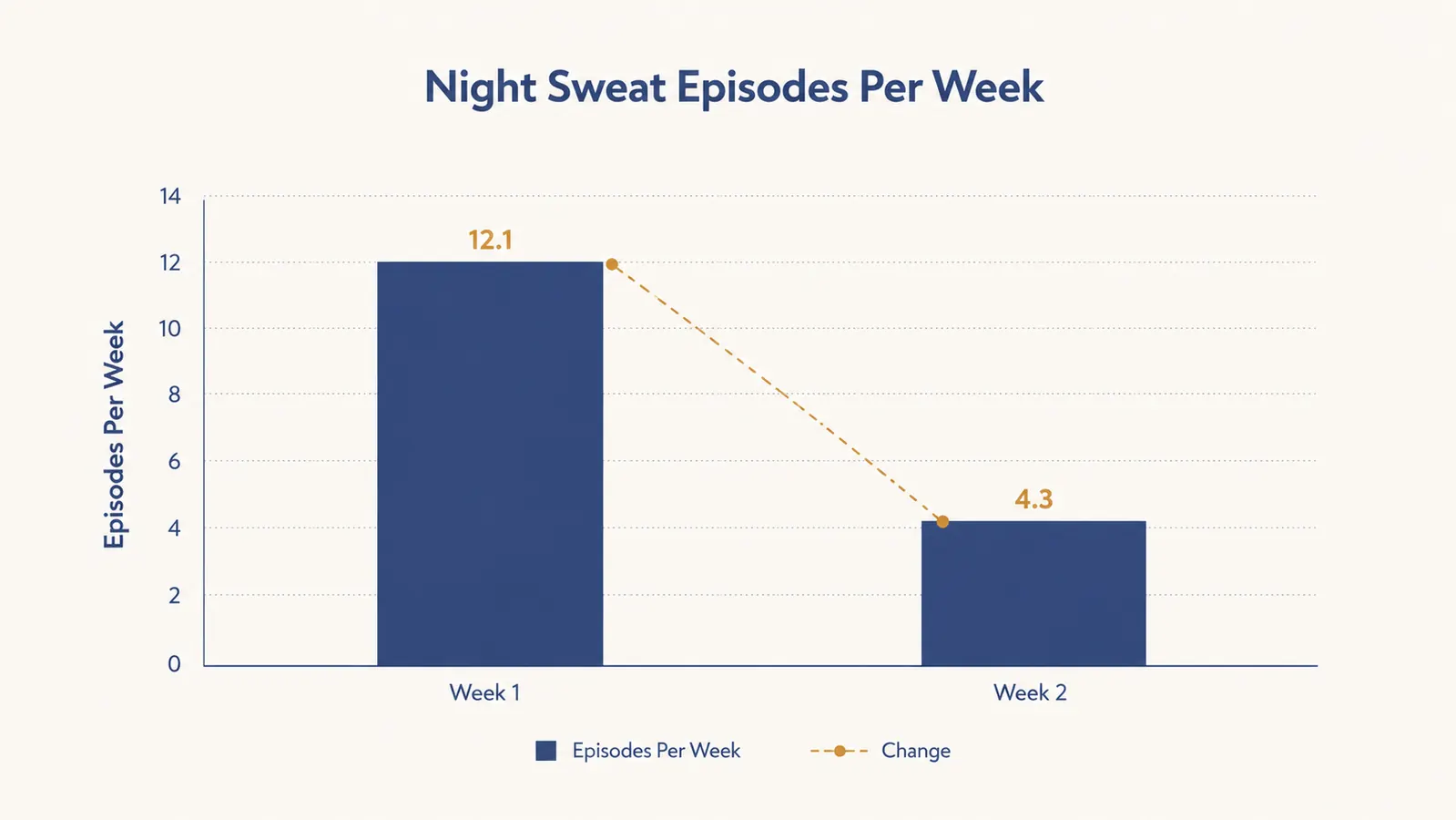
I'm a nurse, so I default to tracking things, and I'd encourage you to do the same here instead of judging the routine after one or two nights. Keep it simple: a note on your phone each morning with a rough number of times you woke up hot, and whether you needed to change your shirt or sheets. Two weeks is usually enough to see a real pattern.
If you sleep next to someone, ask them too. Danny noticed I was tossing and turning less before I noticed it myself, just from sleeping next to me for two weeks straight. Sometimes the person beside you is the more reliable data source, especially in that first week when you're still half asleep for most of the disruptions.
If you're still waking up soaked most nights after two weeks of a genuinely cooler room, a breathable cooling blanket, and lighter sleepwear, that's useful information too. It may point to something worth mentioning to your doctor rather than another bedroom tweak, especially if the sweating is accompanied by fever, unexplained weight loss, or it started suddenly with no clear trigger like a new medication or a warmer season. Persistent night sweats can sometimes signal something medical that a blanket, however good, won't fix, and that's not something to guess your way through.
What Else Helps
A few smaller habits stack well on top of this routine. I stop drinking caffeine by early afternoon, since it can linger in your system long enough to nudge your core temperature up right when you're trying to wind down. I also stopped doing anything strenuous within two hours of bed, a habit left over from working out after night shifts that I eventually had to retire. And I keep a small glass of ice water on the nightstand, not because it fixes anything on its own, but because waking up hot and being able to take a cold sip without fully getting out of bed keeps the disruption short instead of turning into twenty minutes of being fully awake.
A consistent bedtime helps more than most people expect too. My schedule was chaotic for years because of rotating shifts, and I noticed my night sweats got worse whenever my sleep window shifted around, even by an hour or two. Going to bed at roughly the same time each night gives your body's natural temperature drop a predictable target to hit, which seems to make the whole routine, cooling blanket included, work more consistently instead of some nights being fine and others being a mess.
A lukewarm shower an hour or so before bed helps more than a hot one, even though a hot shower feels relaxing in the moment. Your body cools down as it comes off the heat, and timing that drop to land right before you climb into bed works with the same natural temperature dip that makes the Elegear blanket useful in the first place. Small changes, stacked together, tend to do more than any single one on its own.
I didn't need a colder house. I needed a blanket that stopped working against my own body heat, and everything else fell into place around it.
If the routine sounds right, start with the layer that touches you first
Everything in this guide works better once the top layer stops trapping heat. The Elegear cooling blanket is the one change I'd tell any hot sleeper to make first, before rearranging the whole bedroom. See today's price and current availability.
Amazon Check Today's Price on Amazon →